Dear Client:
Industry conferences are a good place to get a gut check on what is on people’s minds — concerns, opportunities, relevant trends and the like. The Beer Insights Spring Conference last week was no different, as speakers and audience questions centered on the softness of beer demand (particularly in April), the co-mingling of beverage categories (welcome to the beer industry, Gallo), the growth of what Boston Beer’s Jim Koch calls the Fourth Category, (consisting of RTDs and FMBs — regardless of alcohol base, with hard tea being the belle of the ball this year), and how major brand market shares are going to shake out this summer as we cycle the Mulvaney effect.
Incidentally, I’m fairly sure that Jim Koch was the one who originally coined the phrase Beyond Beer, although A-B’s Felipe Szpigel codified it. Regardless, as consumers increasingly view alcoholic beverages through the prism of flavor and use occasions regardless of base, it makes sense to consider these products as an emerging fourth bev-alc category — the younger sibling to beer, wine, and spirits (or as the late Jeff Becker would insist, hard liquor).
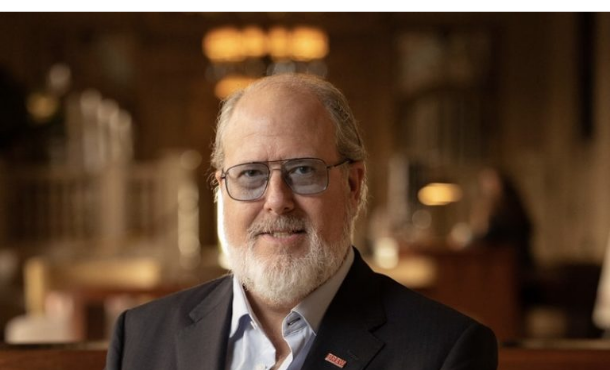
Among the most compelling presentations was that of equity analyst Nik Modi, Managing Director at RBC Capital Markets. Importantly, he covers a myriad of consumer product categories, including beer. I say important because his 20+ years’ experience in other mature categories informs the perception of what is happening in U.S. beer.
He likens us to the proverbial frog sitting in a pot of water slowing coming to boil — we’re too deep in the forrest to see the trees. The forest is the industry, the trees brands. We don’t have a forest problem, we have a tree problem.
He points to other large mature CPG categories that many experts wrote off that have made a resurgence, most notably carbonated soft drinks. It can be done.
“If consumers are walking away from beer,” said Nik, “then explain this to me: Modelo Especial, Modelo Chelada, Corona Extra, Pacifico. Now you can say, ‘Nik, that’s just Jim Sabia pixie dust — you can’t use Constellation as an example.’ But we’ve got Michelob Ultra, we’ve got Busch Light, Coors Banquet, New Belgium and plenty of other brands,” he said.
What business are you in?”, Nik asked the audience. Smatterings of “beer” and “beverages” were uttered. “No, you’re not,” he shot back. “You’re in the mood management business my friends. And we need to start having this dialogue because this is how we fix this problem.”
Americans, on average, drink eight beverages a day, and Nik contends that consumers choose what to drink depending on the occasion and mood state. “There’s a lot of alternatives out there for those eight consumption occasions.” If one night you’re having milk and Oreos at night, and the next night you’re having wine and chocolate with your significant other, “Guess what, milk and wine are now competitors.” All beverages compete with all other beverages for occasions.
“We can’t isolate ourselves to beer,” he said. If we say ‘beer’s got a problem’ and start looking at other beverage categories for growth, we “stop investing” and that’s “what we have been perpetuating in beer.”
But occasions are “morphing and evolving.” In 1990, the percentage of American women with zero close friends was 1%. In 2021, that percentage was 11%. The percentage of women with 6 or more close friends was 41% in 1990 and 24% today. “American society today is far less social than just 30 years ago,” said Nik. “Does the beer category have a female consumer problem? Yes. Because they’re not socializing in those occasions in which you sell. They are spending more time alone reading a book. What do you think they’re drinking? They’re drinking wine. Because you’re not there. You have not adjusted to the occasion.”
Social activity is changing. “Look at the rise of Run Clubs. Consumers still look to be health-conscious, be a part of a community. These gatherings often end up in a bar,” giving a nod to Mich Ultra for capturing that occasion — and I would add Athletic as a brand that has cracked that cohort.
Gaming is also becoming mainstream, contributing to the switch from in-person to virtual connections. The number of global active gamers has increased by 64% since 2015 and is accelerating beyond the COVID bump.
In the old days, “I would go to the bar with my friends and come home. Today I go to work, I go to the gym, and I get on Call of Duty at 8pm with my boys for two hours. Is beer represented in any of those occasions? No.”
According to Numerator, Gen Z is much more likely to limit alcohol intake compared to Millenials due to the concern of being photographed or filmed under the influence on social media, concern of alcohol affecting their mood, and concerns over staying alert, (which is why energy drinks are growing). Is no and low alcohol beer “a good opportunity to feed into this narrative? Absolutely.”
Other headwinds include cannabis, which Jim Koch estimates cuts half a percent off our volume. When pressed on how he came to that number, he said, “Well, I know it’s not zero, and I don’t think it’s more than 1%, so it’s somewhere in between.” Makes sense. But another activity that competes with limited discretionary dollars is online gambling. Over 12% of declining alcohol buyers report gambling as an alternative to drinking, more than cannabis and any other single activity.
Other big CPG categories that have had structural declines over the past 2o years include: Razors, CSDs, cereal, bottled water, spirits, soup, and fragrances. And they all have one thing in common: “The industry leader was not doing their job,” said Nik. Indeed, A-B and Molson Coors have had a “roughly a two-point annual drag on the category over the last 9 years… It’s an optics issue. If the biggest brand isn’t growing, the category isn’t growing.”
“I’m not saying that it is their fault,” Nik continues, referring to A-B and MC, “but what I’m saying is there are brand-level nuances going on with both of those organizations that have caused the optics of the decline of beer. And I think this really sums it up for me. Consistency. [Nik shows a slide of a Corona beach ad next to a generic Bud Light “football starts with Bud Light” ad]. “What is the engagement of a brand new consumer? How do they know what this brand stands for? What occasion do you use it for if you’re not consistent in the message? …We need consistency. We can’t have different marketing messages and bring in a new marketing manager and say, oh, let’s change it up. You need consistency. You’re not getting a return right away. That’s not the way marketing works.”
“Beer does not have a category problem. It has a brand relevancy problem,” said Nik. [Ed. Note: This reminds me of a seminal speech given by former MillerCoors chief Norman Adami at our Summit in 2006, where he said that “we as an industry will talk ourselves into a negative self-fulfilling prophesy (by focusing on the category over individual brands), distracting ourselves from making the type of brand marketing that will get the industry growing.”]
When we talk about wine or spirits taking beer occasions, said Nik, “they are encroaching on what we have normally dominated because we have failed to stay relevant in those occasions.”
“When consumers are relaxing at home, which they are increasingly doing, they typically choose wine.” When out at a bar or club, they are “more likely to replace beer for spirits.” And RTDs are the most likely substitute for outdoor drinking occasions.
And relevant marketing is more important to the beer category than other CPG categories. Why? The knee-jerk reaction is to say that it’s because “beer is a badge”. But it goes beyond that. Beer has consistently taken pricing well above the general CPI over the last 20 years. “The value equation between beer and its alternatives is so out of whack. You need to give consumers a real reason to buy brands in the category” because they have so many other (cheaper) options and beer over-indexes with lower-income consumers.
When lapsed consumers are asked why they left beer, the overwhelming plurality says it’s because they wanted to try something different because “you’re not giving them a reason to stay with what they’re already doing because you’re not evolving your marketing message with the times. So let’s stop talking about the health of the beer category and let’s talk now about how individual brands can be relevant to today’s consumers.”
Nik recommends not forgetting about the biggest cohort of consumers out there: boomers. “Why is all this obsession over Gen Zs and millennials? I get it. I get training the 21-year-old to come into our portfolio and it kind of makes us bigger over time. Fine. But what about Dre? What about older consumers that have over half of the category sales?… It’s a huge missed opportunity.” And Nik says that convenience will be an important driver for this generation.
Nik doesn’t recommend ignoring the younger generation. He calls it “twin engine” marketing — being relevant to a younger diverse population while also appealing to boomers.
And that means moving beyond the four major beer holidays — Labor Day, Memorial Day, Independence Day, and the holidays — and giving attention to other holidays for a multicultural population like the Chinese New Year and Indian Diwali — tremendous merchandising opportunities for alcohol brands.
Beer isn’t dead. It just needs some fresh ideas.
Until tomorrow,
Harry, Jenn, Jordan, and Bianca
“Never knock on Death’s door: ring the bell and run away! Death really hates that.” -Matt Frewer
———- Sell Day Calendar ———-
Today’s Sell Day: 14
Sell days this month: 23
Sell days this month last year: 23
This month ends on a: Fri.
This month last year ended on a: Wed.
YTD sell days Over/Under: 0