Beer Business Daily – beer industry news and numbers

BA Wants Feds to Go After Big Fish 

Dear Client:

In case (unlike your friendly BBD editors) keeping track of the TTB’s deadlines aren’t something inked in red on your calendar, let us remind you: the public comment period deadline related to the TTB’s proposed beer industry trade practice modernization, spurred by President Biden’s 2021 Executive Order on economic competition, is June 7. 

And now that the Brewers Association has the administration’s ear, it plans to take full advantage.

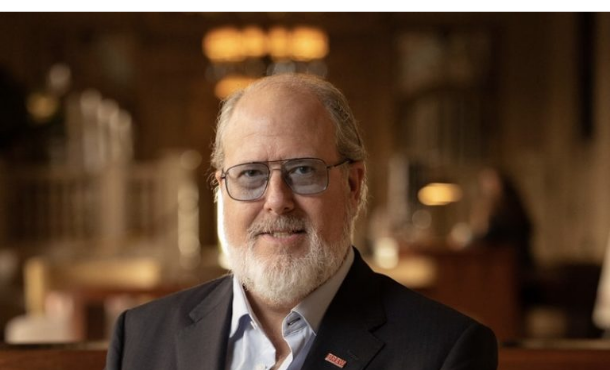
Indeed, BA General Counsel Marc Sorini told attendees at the leg update during CBC Monday when the TTB issued a report in February 2022 in response to Biden’s Executive Order, the “Brewers Association comments were the most cited of the hundreds of comments received.” 

And ahead of next month’s public comment period deadline related to the TTB’s “Advanced Notice of Proposed Rulemaking,” Marc gave a preview of what the BA’s comments “which we’re going to file right before the public comment period deadline” will include. 

Among the topics the BA plans to comment on in hopes of spurring reform are:

  • Category management: Among what Marc characterized as “a lot that goes on in category management that we think is problematic” are category managers who are often competitors that “act as the gatekeeper between the retailer and everybody else.” He said it’s a “per se” problem that threatens retailer independence the BA plans to “stress” in its comments to the TTB. 
  • Large sports and entertainment venues: When it comes to large venues and stadiums, the BA is concerned about “sponsorships” by bev alc brands which are supposed to be “completely separate” from pouring rights. But “when you walk into these large stadiums, by strange coincidence, the people paying the biggest sponsorship dollars always have all the taps and virtually all the sales,” Marc said. Because the practice “is still widespread” despite a $5 million case the TTB made against “one large industry member,” the BA plans to ask the TTB to use the legal concept of “presumption” to go after cases where “a sponsorship paid for those tap handles.”
  • Digital marketing practices: Marc pointed to the surge of “third-party platforms” used in DTC delivery to consumers “which have become more places for pay-to-play” especially related to search engine optimization. “We think this is a big problem and it’s a problem that’s going to become bigger as the electronic marketplace gains,” Marc said. As such, the BA wants regulations to make it clear the same commercial bribery rules apply to digital spaces.

The BA’s overarching goal in its comments to the TTB? To make sure the agency has teeth to enforce laws on the books. But that’s been hard thanks to the 1992 Fedway court decision authored by then- Judge Ruth Bader Ginsburg which required the TTB to show a practice has the potential to put a retailers’ independence at risk which “can sometimes be hard for the TTB to prove.” Marc’s proposed solution? For the TTB to “beef up” enforcement of “per se” or “presumed” threats to retailer independence.

“ENCOURAGED” BY “BIG” TTB INVESTIGATION. Circling back to the initial comments the BA provided to the TTB following Biden’s Executive Order, Marc noted the org suggested the TTB’s investigative resources go toward the “big fish” in the industry.

Since then, Southern Glazer’s Wine & Spirits has come under investigation by the agency [see BBD 03-31-2023].

“One of the things that we’re somewhat encouraged by, is that there is a very large industry member that we know is under investigation from TTB,” Marc said. “We don’t know what the issue is, but the point is they need to be focusing –we think – their efforts on stopping really competitively significant conduct as opposed to going after minnows.” 

Beyond what’s on deck via likely federal reforms, Marc addressed the latest legislative developments at the state level. 

FRANCHISE REFORM “A PRIORITY.” At the state level, one of the areas that will be “a priority going forward” for the BA is franchise reform. 

Marc concedes that this initiative will be “a long multi-decade process,” as these laws have “been on the books for decades” and will be “vigorously defended,” but he maintains that franchise laws have become out of date. 

“These laws were written in the 1970s and ‘80s,” he said, and “at the time they made sense because you had a very small number of national brewers and mostly mom and pop distributors and they were designed to equal bargaining power. But for the people in this room [craft brewers], that bargaining power has completely flipped.”

He told the room that litigating these cases is a “very expensive” process, and will likely cost suppliers “a million dollars” even if they have “a meritorious case to say they have ‘good cause’ to leave a distributor.” And “at that point, it’s very rarely a financial game that most small brewers can engage in. So, in effect, it traps smaller suppliers.”

It is the BA’s belief that “there needs to be reasonable exemptions for smaller sized brewers.”

He says they made “some progress” on this front between “2017-2019,” but then COVID sucked “all the oxygen out of the room and there was not a lot of progress other than the final triumph of the Massachusetts franchise law,” which is now in question too, [see CBD 02-08-2023]. Still, Marc believes they have a “good case” there, noting how “the Massachusetts Attorney General just intervened on behalf of the brewer [Jack’s Abby] in that case.”

There were a couple more franchise reform bills introduced in various states this year, many of which have not gained much traction, still “because of the introductions” there will be “some positive discussions.” And he believes that not having an “enormous amount of success in a given year shouldn’t discourage the process.”

DTC SHIPPING “IMPORTANT” FOCUS FOR BA TOO. Another issue they find very important at the state level, is direct-to-consumer rights. “We think that the market needs to go toward a reasonable direct-to-consumer interstate shipping model,” Marc said.

“Distribution channels are contracting and there’s just no way that our distributor partners who are terrific for larger brands can effectively handle teeny tiny brands.”

The solution there is DTC shipping, he said, “you’ve seen it work with wineries.” There are “almost 13,000 in this country” and “a huge number of them are making a significant amount of their business through a combination of direct-to-consumer shipping and then their own version of their own-premise business.” He recognizes that this effort is another “tough lift,” as “there are entrenched industry members in other tiers that are not particularly happy with seeing this happen.”

Still, he nodded to the long game of these efforts, noting how “it took wine 25 years to get from a place where there were only 10 states that allowed interstate DTC to now there’s 47 states. This is going to take a generation, but it can work.”

“BACK TO THE FUTURE” WITH SELF-DISTRIBUTION. One more “hard lift” they’re taking on in the states is self-distribution. He says it just “makes sense” as an outlet for the 9,000-plus breweries in the nation. In fact, he thinks they’re going “back to the future” with this push, because in the ‘30s “most of the small brewers were self-distributing, at least in their local markets.” But as “those small brewers declined, the need for that declined.”

So “now with many, many small brewers, you need self-distribution,” Marc said. “Again, hard lift in the states that have mandated three-tier, but we can keep on pushing.”

SQUASHING EQUIVALENCY EFFORTS. Last but certainly not least is the battle of equivalency. “It’s a facially attractive argument to plunk down a can of a flavored malt beverage and a can of a canned cocktail and say, ‘well, they’re roughly the same alcohol product, shouldn’t they be taxed and regulated the same?’”

The BA says,”no, absolutely not.” 

As Marc tells it, a canned cocktail is “still a cocktail and just because you premixed it and didn’t have the bartender mix it, shouldn’t make a difference. We do think it’s intuitively and demonstrably direct that higher alcohol products have more negative social policy implications than a lower alcohol product. And the liquor companies themselves have admitted that canned cocktails are a recruiting tool for their higher proof products.”

He admits they were caught kind of asleep on this issue a couple years ago when the liquor industry started this initiative, and a couple states passed tax cuts. But “they now have very definitive studies showing that those states lost revenue and left money on the table, and in fact, the prices continued to rise despite the fact that they got tax cuts.”

This year, beer has been “batting a thousand” on these fights, and “the only state that’s still in play that we’re really worried about is California, although that’s not a tax cut bill, it’s purely a distribution bill, but we’re remaining vigilant.” Adding, “this is going to be a long struggle because the liquor folks want what we have, which is lower taxes, higher availability.”

DOUKERIS LAMENTS SOCIAL MEDIA CHALLENGES

ABI chief Michel Doukeris told the Financial Times in an interview that social media isn’t always fair, particularly as it pertains to the Bud Light fiasco. “People often talk about this topic in social media like noise,” he said. “You have one fact and every person puts an opinion behind the fact. And then the opinions start to be replicated fast on each and every comment. By the time that 10 or 20 people put a comment out there, the reality is no longer what the fact is, but is more [about] what the comments were.”

The FT says that his dilemma “underscores the challenge faced by consumer goods companies over perceived association with contentious social issues.” 

Michel stressed that it was only one can and “it was one post. It was not an advertisement.” 

The FT continues: “He complained that there were even videos of billboards with images of the Bud Light can inserted ‘electronically’ and ’10mn people [were] watching it and commenting . . . That had nothing to do with Bud Light, it was just like pure social media creation.’”

The piece concludes with a sunnier outlook from an analyst: “It looks like the worst has passed in terms of the fall in volumes,” said Simon Hales, analyst at Citi. “The question now is how quickly we can see some return to normality, or at least some improvements in that relative rate of decline.”

IS IT? SCANS & DISTRIBS SHOW CONTINUED WEAKNESS

Meanwhile, distributors we’ve spoken to say that the double digit drop in Bud Light volume has continued into May, with several saying it’s “gotten worse.”  The term “Bud Light boycott” had been dropping in popularity on Google Trends, but has inched back up over the last few days, likely because……  

TRUMP GIVETH, AND…  Two weeks after Donald Trump Jr. advised his listeners to give A-B a break, former President Trump piled back on. “It’s time to beat the Radical Left at their own game,” Trump said in a widely reported post to Truth Social. “Money does talk — Anheuser-Busch now understands that.” If the fires were abating, they just got fanned a bit. 

Still, BUD remains strong, closing Monday at 64.68, about where it has hovered for weeks. 

SCANNER SHOWS MUCH OF THE SAME

In the NIQ scans courtesy of Bump Williams Consulting, volumes for the week ending April 29 had Bud Light Blue down 27.3%. That’s a slight worsening of the trend from the previous week, when it was down 26.1%, which was worse than the week before, down 21.1%. Bud red down 15.9% and Mich Ultra still running down 8.1%. 

Until tomorrow,

Harry, Jenn, Jordan, Bianca

“It is impossible to repent of love. The sin of love does not exist.”

-Muriel Spark

———- Sell Day Calendar ———-

Today’s Sell Day: 7

Sell days this month: 23

Sell days this month last year: 22

This month ends on a: Wed.

This month last year ended on a: Tues.

YTD sell days Over/Under: 0

Channels